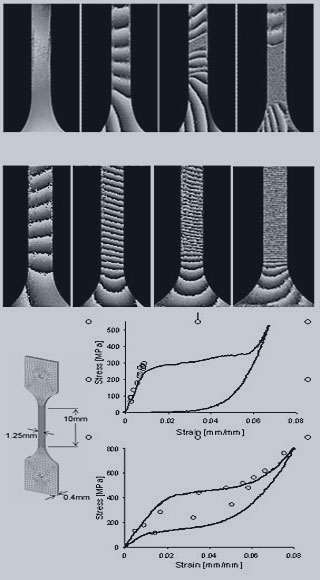
We dusted off the interferometer recently to perform some new experiments on Nitinol. The photo on the left shows our four beam phase shifted moire intereferometer trained on a Nitinol tension sample in a simple hand operated load frame. We had our expert photographer Andy on hand and took quite a few long exposure photos [...]
Significant advances are being made in simulations for medical devices. The picture on the left, shared with me by Dr. Tina Morrison, former post-graduate student in Charles Taylor’s group at Stanford University shows the predicted pressures in a patient specific aorta.
Flow and pressure waves emanate from the heart and travel through the major arteries where they are [...]
This is a picture of an excised mitral valve from a pig with suture and a clip holding the leaflets together in a novel approach to treating mitral valve regurgitation. It was placed percutaneously using a specially designed catheter. The superelastic Nitinol clip was designed and developed using Finite Element Analysis (FEA).
You can download the patent protecting this [...]
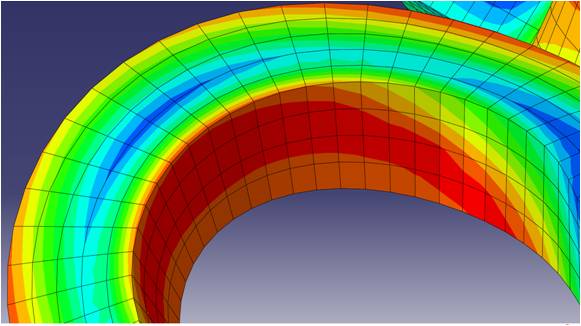
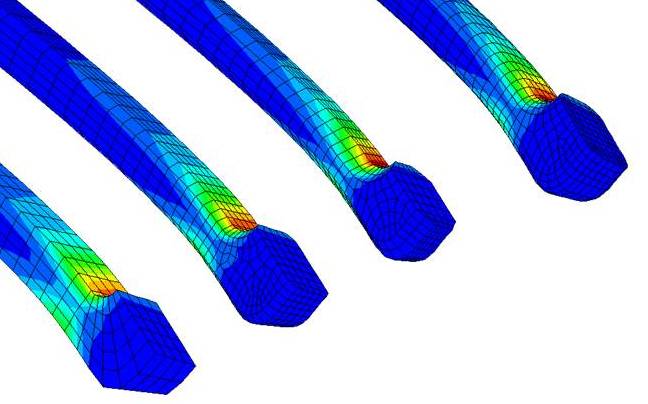
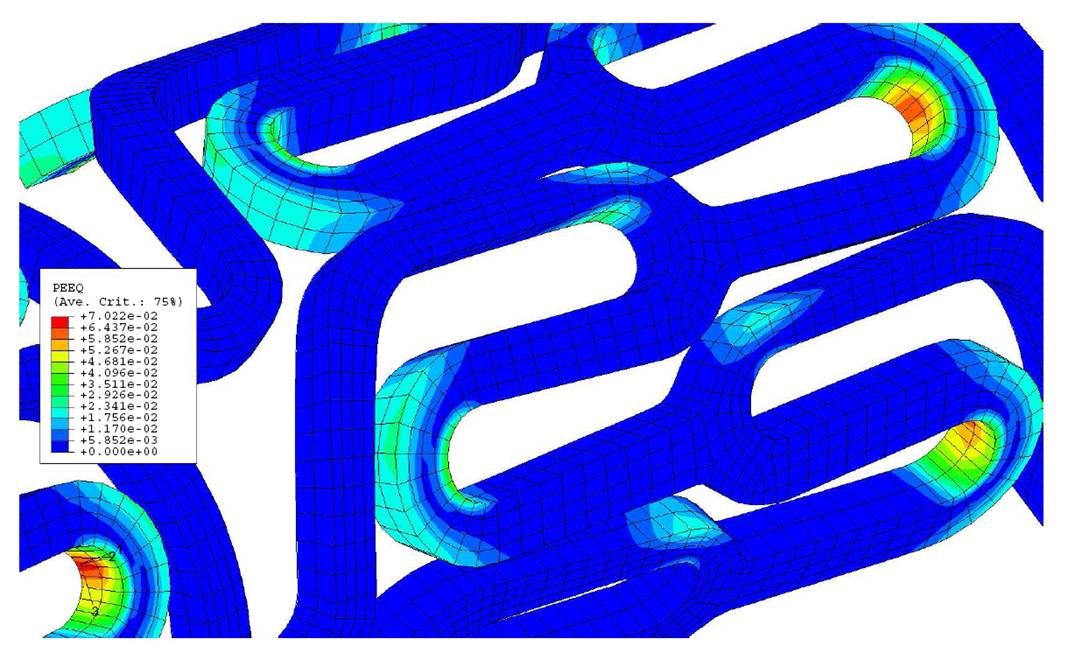
Finite Element Analysis (FEA) is routinely used to perform fatigue analyses of cardiovascular stents. For the case of balloon expandable stents, this means modeling the crimping of the stent onto the delivery balloon, the expansion and recoil of the stent as would occur during deployment and finally the simulation of fatigue deformations. Fatigue deformations typically [...]
Follow this link to the ASTM website and find the long awaited for “Standard Guide for Finite Element Analysis of Metallic Vascular Stents Subjected to Uniform Radial Loading”.
This guide establishes general requirements and considerations for using finite element analysis techniques for the numerical simulation of metallic stents subjected to uniform radial loading. These stents are [...]
There is no excerpt because this is a protected post.
Medical device manufacturers are increasingly required to demonstrate that their products are safe and effective when subjected to complex loading conditions in the human body such as when the device may experience combinations of bending, twisting and compression. Physical test methods are difficult to implement in such cases, can only consider a finite number of [...]
You can download my presentation at the 2007 Cleveland Clinic Stent Summit on carotid artery stent fractures from an engineers perspective which discusses combined loading conditions, fatigue, material limits and other factors.
You may download our presentation where we give results from recent in-vitro tests and advanced finite element analysis simulations as an example of a comprehensive and self-consistent engineering methodology for understanding therapeutic applications of RF tissue ablation. .
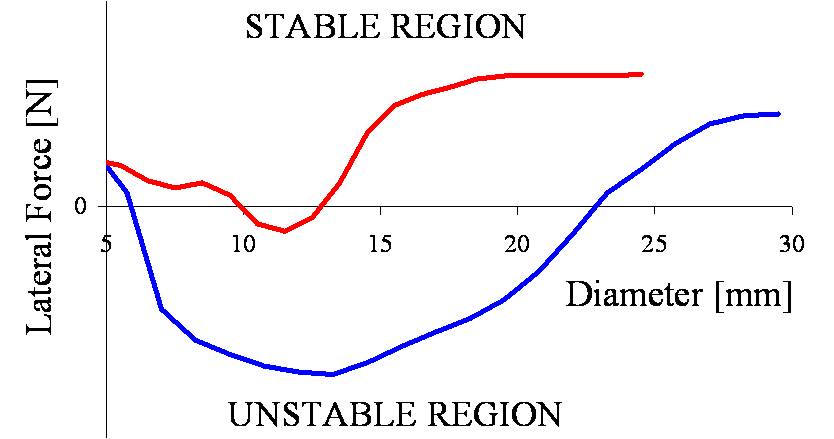
Radial force behavior is one of many engineering design criteria important to the design of implantable medical devices such as stents. Interpretation and extrapolation of bench-top data to predict in-vivo performance necessitates a thorough understanding of influence parameters such as boundary conditions and material uncertainty. An integrated modeling and test validation approach is needed to [...]