My Open Heart Surgery

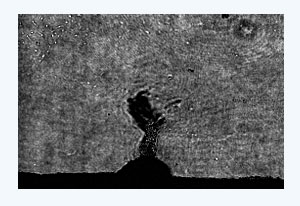
That’s me in the photo on the left during open heart surgery to replace my native aortic valve.

Years ago I was diagnosed with an “organic murmur” and after following it closely with my cardiologist we decided it was a good time to have a replacement of my aortic valve.  I was able to plan for [...]

High Speed Testing of Medical Devices and Materials

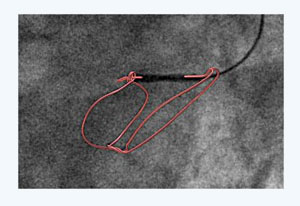
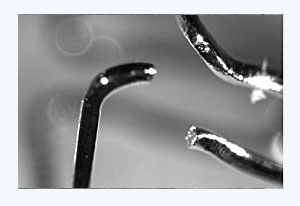
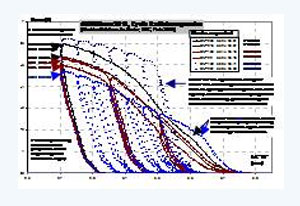
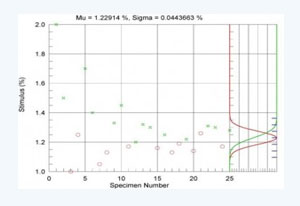
An important input to FEA is material characterization and limit information.  In our laboratory we use  a Bose 3230 test system for achieving test speeds up to 200Hz.   Depending on the project, we may test complete devices, sub-components, coupon samples and/or simple material characterization samples.  Many times, we will test more than one [...]

FEA and the FDA

I just returned from a workshop sponsored by the FDA (and the NHLBI and NSF) on Computer Methods for Cardiovascular Devices.  It was an excellent workshop providing an audience of regulatory, academic and industrial interests a chance to get caught up on the state-of-the-art, trends and, in general, to exchange ideas on the issues of [...]

Identifying Worst Case Device Sizes

For medical devices, rarely does “one size fit all”.  The human body is extremely variable and patient populations, especially those with disease present a wide range of differences that the medical device design engineer must consider.

Identifying the worst case size for a product family is an important part of the validation process for implantable [...]

Contact Interaction for Medical Implants

There are many circumstances when it is necessary to model contact and contact interactions when analyzing medical implants.  Such circumstances arise when devices interact with tooling, catheters, vessels and when self-contact occurs.  This latter situation arises for example when a stent is crimped down tightly to catheter dimensions.

ABAQUS/Standard provides a range of methods for defining [...]

Evaluating Design Instabilities with FEA

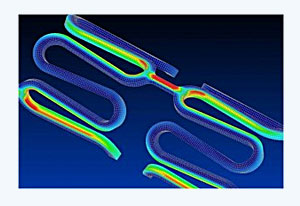
Finite Element Analysis is routinely used to evaluate the performance and durability of medical devices.  When using an implicit method such as ABAQUS/Standard, FEA can also be used to evaluate the geometric stability of a proposed design.  Such issues could arise for example when designing stents for large vessels, such as the aorta, [...]