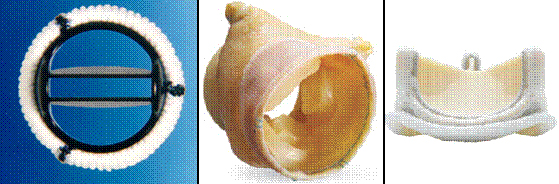
I just returned from a workshop sponsored by the FDA (and the NHLBI and NSF) on Computer Methods for Cardiovascular Devices. It was an excellent workshop providing an audience of regulatory, academic and industrial interests a chance to get caught up on the state-of-the-art, trends and, in general, to exchange ideas on the issues of [...]
For medical devices, rarely does “one size fit all”. The human body is extremely variable and patient populations, especially those with disease present a wide range of differences that the medical device design engineer must consider.
Identifying the worst case size for a product family is an important part of the validation process for implantable [...]
My first job out of graduate school and post-doctorate work was with the footwear company, NIKE. I was fortunate to hire into the heart of the most advanced footwear technology department in the world and I could not have had a more exciting job description. I began by learning how to design NIKE AIR cushioning [...]
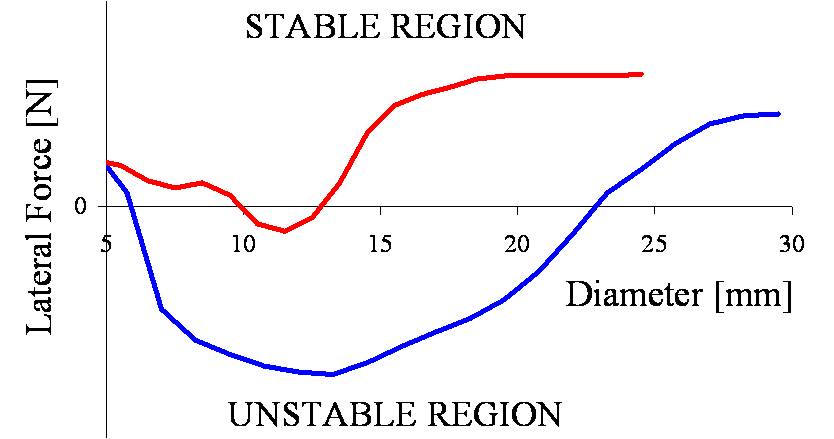
Finite Element Analysis is routinely used to evaluate the performance and durability of medical devices. When using an implicit method such as ABAQUS/Standard, FEA can also be used to evaluate the geometric stability of a proposed design. Such issues could arise for example when designing stents for large vessels, such as the aorta, [...]
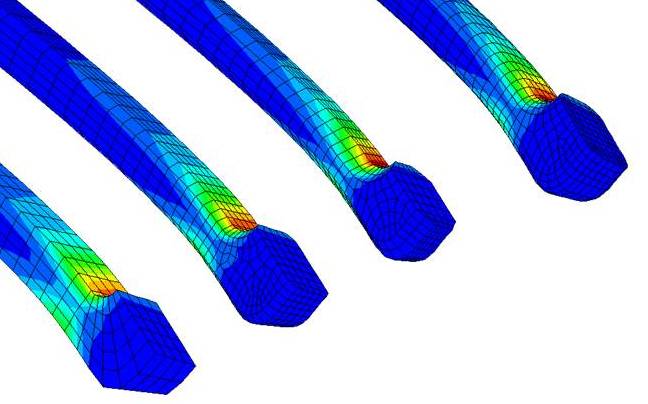
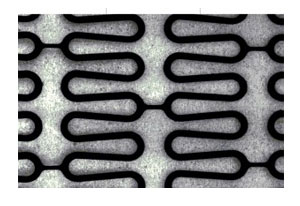
A typical process for making stents is electropolishing to remove material and processing defects and to impart a smooth finish with rounded corners. It is well known that a polished part will have superior fatigue resistance, but how much does the rounding of edges affect the stress and strain in the stent when loaded?
We studied [...]
Finite Element Analysis is an excellent engineering tool for optimizing medical implants. It provides a fast and reliable method for evaluating both the performance and safety issues associated with any given product. A variety of design concepts can be evaluated and relative safety factors determined for the full size range of an intended product.
Parametric studies [...]
Nitinol is a unique metallic alloy that is ideally suited to use in medical devices. It has excellent biocompatibility and most of all it has the ability to undergo significant recoverable deformations. This allows devices made with Nitinol to be reduced to catheter dimensions and expanded at the implant site.
Much work has been done to [...]
This is a picture of an excised mitral valve from a pig with suture and a clip holding the leaflets together in a novel approach to treating mitral valve regurgitation. It was placed percutaneously using a specially designed catheter. The superelastic Nitinol clip was designed and developed using Finite Element Analysis (FEA).
You can download the patent protecting this [...]
You can download the brochure for this special symposium that brings together state-of-the-art developments in clinical imaging techniques, computer modeling, medical device testing and materials characterization with a focus on medical implants, their design and the Experimental Mechanics underlying device interaction with the human body.
You can download a presentation of emerging transcatheter devices and technologies that I put together from the engineering design perspective that includes AAA solutions, fenestrated grafts, embolic protection devices, vena cava filters, stents, closure devices coronary sinus devices and percutaneous heart valves and repair technologies.